Glow-worm combi, system or regular: which fits which home
By Jordan Valentine-Dunn, Gas Safe registered engineer · 9 September 2026
Glow-worm splits its gas range three ways. A combi heats water on demand with no cylinder and no tanks. A system boiler feeds a hot water cylinder from the mains, with nothing in the loft. A regular boiler, also called heat only or open vent, needs a cylinder plus loft tanks. The mains flow rate usually decides which one fits.
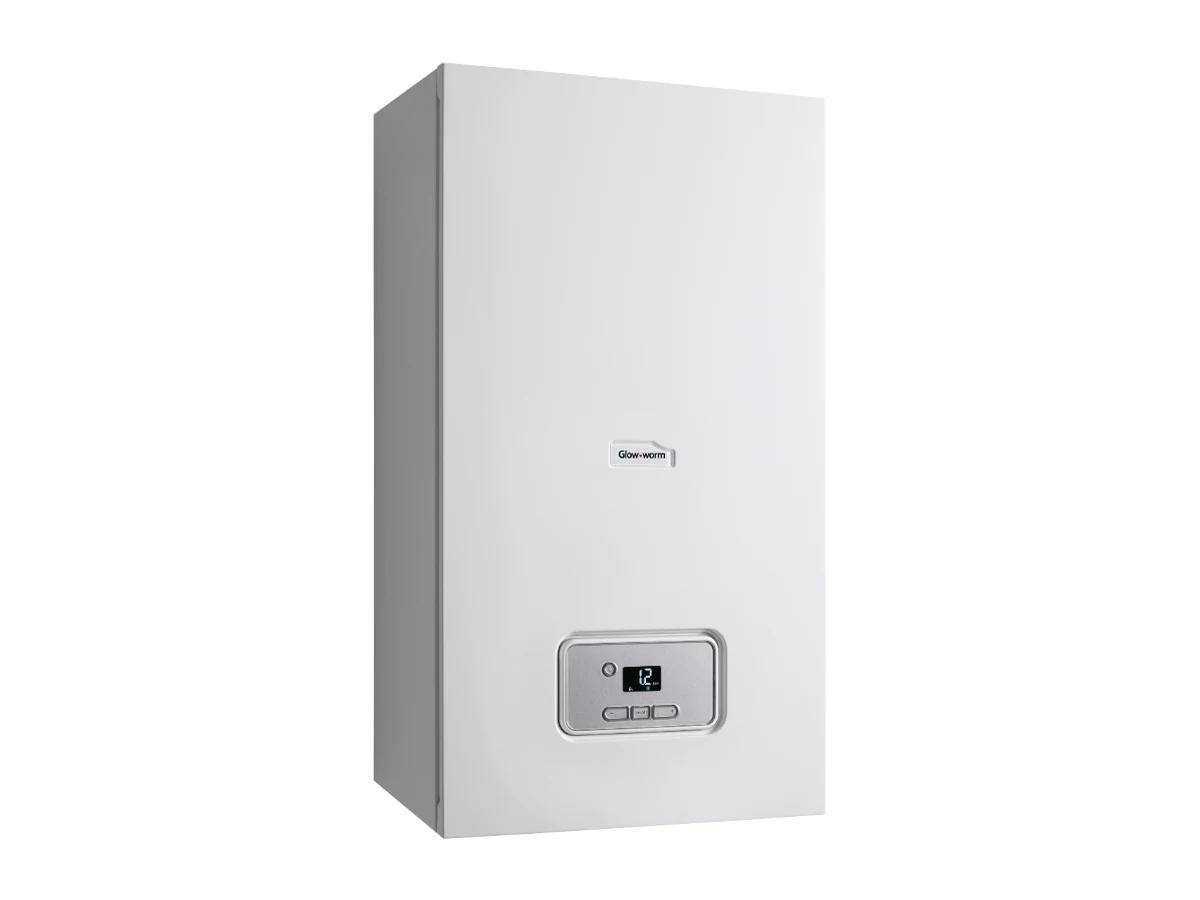
What is the difference between a Glow-worm combi, system and regular boiler?
Where the hot water comes from, and what the property has to house. Glow-worm's own explanation is plain. A combi provides hot water and central heating from one appliance, taking water directly from the mains and heating it when a tap opens rather than storing it, so no cylinder and no tanks are needed. A system boiler heats water and sends it to a hot water cylinder to store, keeping a constant supply available, and takes its own supply from the mains, so there is no separate tank in the loft. A regular boiler, which Glow-worm also calls heat only, conventional or open vent, works with a storage cylinder that usually lives in the airing cupboard, a cold water tank in the loft, and a second tank that keeps the level in the heating circuit up.
Which Glow-worm boilers are combis?
Most of the current range. Glow-worm's combi listing carries six products: the Compact Combi, the Compact Combi LPG, the Energy combi, the Ultimate3 combi, the Easicom3 combi and the MicraCom. Glow-worm points its 25kW models, such as the Compact, at homes and flats of up to two bedrooms and one bathroom. The 30kW models, including the Energy combi, go to homes of up to four bedrooms and two bathrooms. The 35kW models, such as the Energy 35, are aimed at five bedrooms and up or anywhere hot water demand is higher. The Betacom4 no longer appears on the current combi listing, so treat one on site as service and repair work.
Which Glow-worm boilers are system boilers?
Three of them: the Energy system, the Ultimate3 System and the Easicom3 System. Glow-worm's case for a system boiler is that it takes its water supply from the mains, so there is no separate tank in the loft, which frees that space and makes for a cheaper and easier install than a regular boiler. Sizing runs 12kW or 15kW on the Energy system for one or two bedrooms with up to two bathrooms, 18kW where a smaller household uses a lot of hot water at the same time, 25kW on the Ultimate3 or Easicom3 for a three or four bedroom house with several bathrooms, and 30kW on the Energy system for five bedrooms and up.
Which Glow-worm boilers are regular?
The same three ranges again: the Energy regular, the Ultimate3 Regular (Open Vent) and the Easicom3 Regular. The sizing advice changes shape on this page, which is worth knowing before a survey. Glow-worm sizes its combis and system boilers by bedrooms and bathrooms, but sizes the regular range by radiator count. Up to six radiators takes the 12kW Energy regular, around eight in a property with more than one bathroom takes the 15kW, more than fifteen radiators points at the 25kW Ultimate3 or Easicom3, and three or more bathrooms with twenty radiators or more takes the 30kW. On a heat only job, the radiator count is the number to take off the survey.
How do you know a combi will cope?
Measure the flow rate before promising anything. Glow-worm publishes a method the customer can follow themselves: hold a measuring jug under the tap or shower, run it flat out for six seconds, then multiply the litres collected by ten to get the flow rate in litres per minute. Below ten litres per minute Glow-worm calls the pressure low and says a regular or heat only boiler is the right choice. The reason sits in how a combi draws its water. Because it comes straight off the mains, Glow-worm's own guidance is that in a house with several bathrooms only one tap or outlet can be used effectively at a time, and the pressure drops quickly when several taps and showers run together.
When does a regular boiler still earn its place?
When the loft tanks are already there and the mains cannot be improved. Glow-worm puts regular boilers at larger households that need hot water in more than one bathroom at the same time, and at properties with low water pressure or older radiators. The check before quoting one is loft space for the cold water tank. Where the loft is tight and the mains pressure is reasonable, Glow-worm's own advice is that a system boiler suits better, which keeps the cylinder and the stored hot water while losing the tanks.
What to check before you quote a configuration change
- Measure the mains flow rate at the kitchen tap. Under ten litres per minute rules out a combi on Glow-worm's own guidance.
- Count the bathrooms and how often two outlets run at once. That decides between stored and instant hot water.
- Look in the loft. A regular boiler needs room for a cold water tank, a system boiler does not.
- Count the radiators on a heat only job, because that is how Glow-worm sizes its regular range.
- Read the configuration off the data plate rather than the customer's description, since the Energy, Ultimate3 and Easicom3 each come in all three formats.
Only a Gas Safe registered engineer can size, install and certify a boiler. This is general guidance rather than a substitute for the manufacturer's manual, the data plate or your own survey of the property.
Boiler reference
Whichever configuration goes in, the record is the same job every time. Manifold builds the CP12 and the service record from the check on your phone, reads the make, model and GC number off the data plate with PlateScan, and keeps the property's appliance history ready for the next visit.
See how Manifold helps