Ideal combi, system or heat only: which fits which home
By Jordan Valentine-Dunn, Gas Safe registered engineer · 9 September 2026
Ideal Heating builds its gas boilers in three configurations. A combi heats water on demand with no cylinder and no tanks. A system boiler feeds a hot water cylinder from a sealed circuit. A heat only boiler, also called conventional, needs a cylinder and usually a cold water tank. The existing system normally decides which one fits.
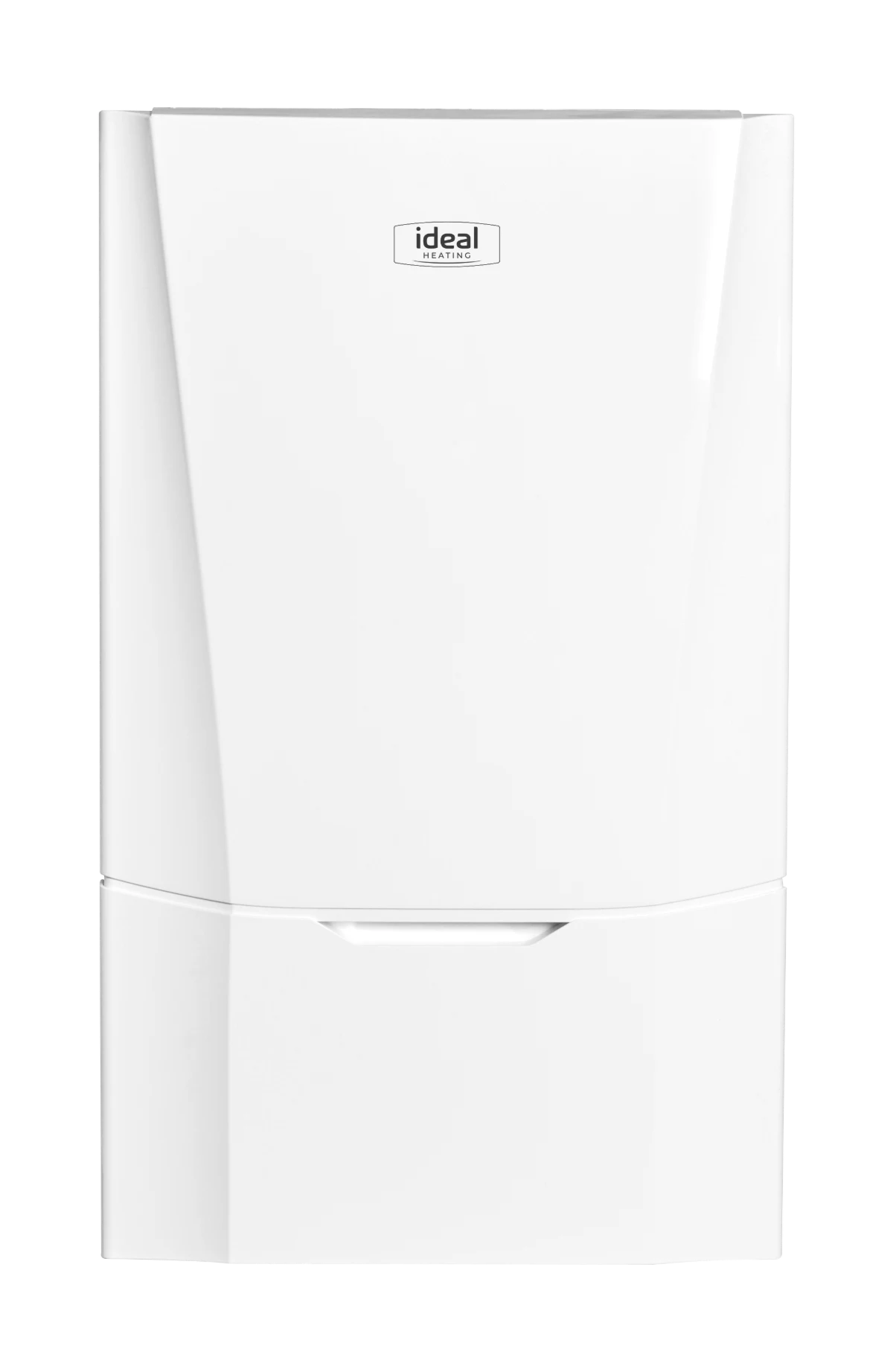
What is the difference between an Ideal combi, system and heat only boiler?
Where the hot water comes from, and what the property has to find room for. Ideal's own summary is short enough to quote. A combi boiler provides both heating and hot water instantly, so there is no need for a separate cylinder or storage tank and the whole appliance sits in one compact unit. A system boiler is designed to work with a cylinder because it has no hot water heat exchanger of its own, and it carries an expansion vessel and a pump inside the case so it can run on a sealed system, fully pressurised and filled from the mains cold water connection. A heat only boiler is the simplest of the three. Ideal describes it as suitable for either an open vented system with a tank in the loft, or a sealed system with an external pump and expansion vessel added, with hot water coming from a cylinder either way.
Which Ideal boilers are combis?
All three current domestic ranges. Ideal publishes combi versions of the Logic, the Logic Max and the Vogue Max, so the combi option runs from the entry tier right to the top of the line-up. Ideal puts combis at smaller households with one bathroom and calls them the complete, compact package for heating and hot water. The point it leans on is that a combi only heats the water the household actually uses, which avoids the standing losses of a cylinder sitting hot between draw-offs. On a swap that usually means a cupboard fit and no loft work.
Which Ideal boilers are system boilers?
The Logic, the Logic Max and the Vogue Max again. Ideal aims system boilers at homes with more than one bathroom, and at properties with little or no loft space, since a system boiler needs a cylinder but no cold water tank above it. Ideal's own navigation puts it as homes where a dry loft is required, which is the point worth raising with a customer who wants the loft boarded out. Where hot water use is heavy, Ideal argues a system boiler can work out more cost effective than a combi, because the water is already stored and ready rather than being heated at the moment a tap opens.
Which Ideal boilers are heat only?
The Logic and the Logic Max, in the versions Ideal calls Heat. Ideal publishes a Logic Heat and a Logic Max Heat, and its user guide library carries a Logic MAX Heat 2 book alongside the Combi 2 and System 2 guides. The Vogue Max does not appear in heat only form on Ideal's current product pages, so a job that has to stay conventional at the premium tier is worth checking against Ideal's own line-up before it is quoted. Ideal describes heat only as the right choice where any tanks in the loft are being kept, which is most of the time on a like for like replacement in an older property.
When is a combi the wrong call?
When the property stores hot water for a reason. Ideal puts combis at smaller households with one bathroom, and points homes with several bathrooms towards a system or heat only boiler working with a cylinder. A combi draws straight off the incoming main, so the flow at the tap is only ever as good as the flow into the house, and a bigger output does not change that. Where the mains is weak, or where two showers can run at once, the cylinder conversation is the honest one, even when the customer opened by asking to lose theirs.
Can an Ideal heat only boiler run on a sealed system?
Yes, with the right parts added. Ideal states that a heat only boiler can be used either on an open vented system, which has a tank in the loft, or on a sealed system with the addition of an external pump and expansion vessel. That is useful to know on a conversion where the customer wants the loft tanks gone but the rest of the job does not suit a system boiler swap. The components a system boiler carries internally have to be found space outside the case instead, which means somewhere sensible and accessible rather than wherever they will fit. Work to the installation manual for the appliance rather than assuming the older heat only unit on the wall was set up the same way.
What should you check before quoting a change of configuration?
Whether the property can take it, before the model choice comes up at all.
- The data plate: read the make, model and configuration off the appliance rather than from what the customer believes is fitted.
- Incoming mains flow and pressure: this settles whether a combi can meet the demand, because a combi takes water straight off the main.
- Bathrooms and simultaneous use: Ideal points homes with several bathrooms towards stored hot water rather than a combi.
- Loft and cupboard space: a system boiler needs a cylinder but no cold water tank, so it suits a loft the customer wants to keep clear and dry.
- Cylinder condition and sizing: keeping the cylinder only helps if it is sound and big enough for the household it serves.
- Flue route and clearances: a change of configuration often moves the appliance, and the flue has to work from the new position.
Only a Gas Safe registered engineer can size, install, service or certify a gas boiler. This is general guidance on how Ideal groups its domestic gas range, not a substitute for the installation manual or a proper heat loss and hot water demand calculation. Confirm the exact model and output from the data plate, and work to Ideal's current instructions for the appliance in front of you.
Boiler reference
Whichever configuration goes in, the record afterwards is the same job every time. Manifold builds the CP12 and the service record from the check on your phone, reads the make, model and GC number off the data plate with PlateScan, and keeps the appliance history against the property so the next visit starts with what is actually fitted rather than what the customer remembers.
See how Manifold helps